Hand-Batched. Eyeballed. Unprovable.
Here is how most gypsum concrete gets mixed in the Northwest: a laborer breaks 50-pound bags into a hopper, another shovels sand, and the pump operator adjusts water by feel until the slurry “looks right.” Bag counts drift. Sand gets scooped, not weighed. Water follows the operator’s mood and the weather.
The chemistry does not forgive that. Gypsum concrete strength is a direct function of the water-to-gypsum ratio and the sand loading. Over-water the mix and crystallization is diluted — you get low compressive strength, a soft dusty surface, and a slab that takes forever to dry. Over-sand it and you get the same failure by a different route. The industry knows this: over-watering and over-sanding are the number-one cause of weak gypcrete pours, and the resulting failures — flooring adhesives letting go, surfaces powdering under traffic, PSI cores testing under spec — show up months after the crew is gone.
And when they show up, there is no record. The batch that failed looks exactly like the batch that didn’t. It becomes the GC’s word against the sub’s, with a flooring installer and an owner in the middle.
One Trailer. One Computer. Zero Guesswork.
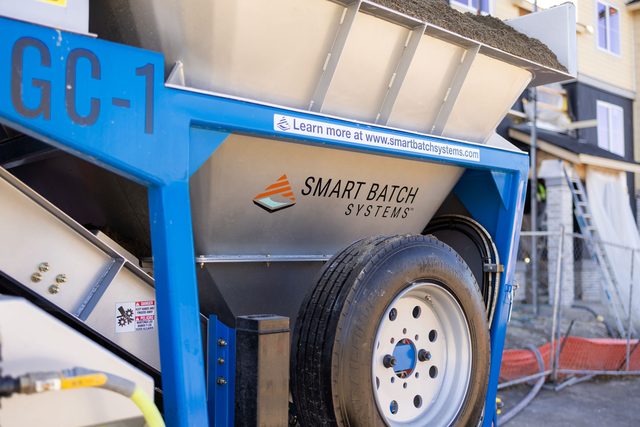
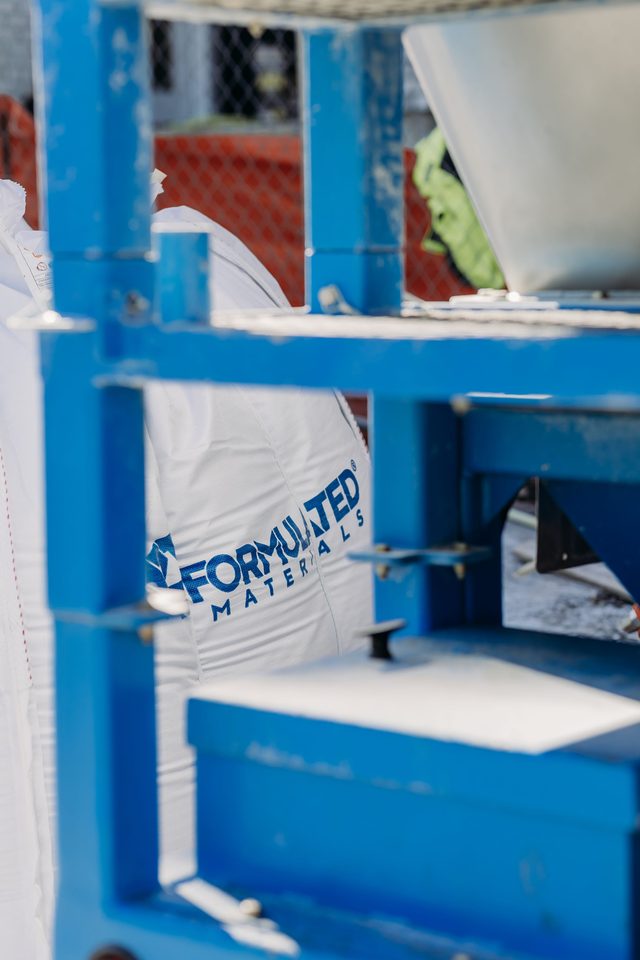
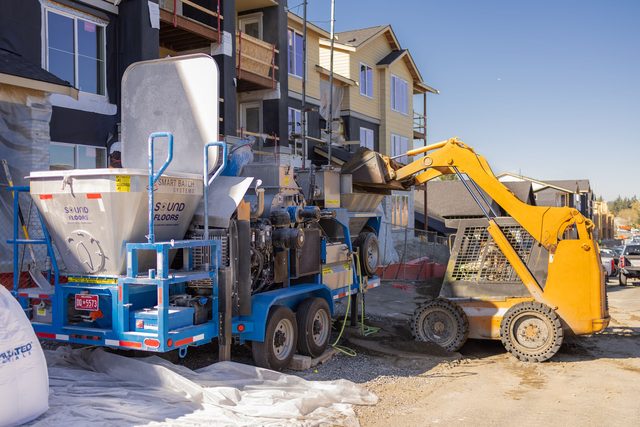
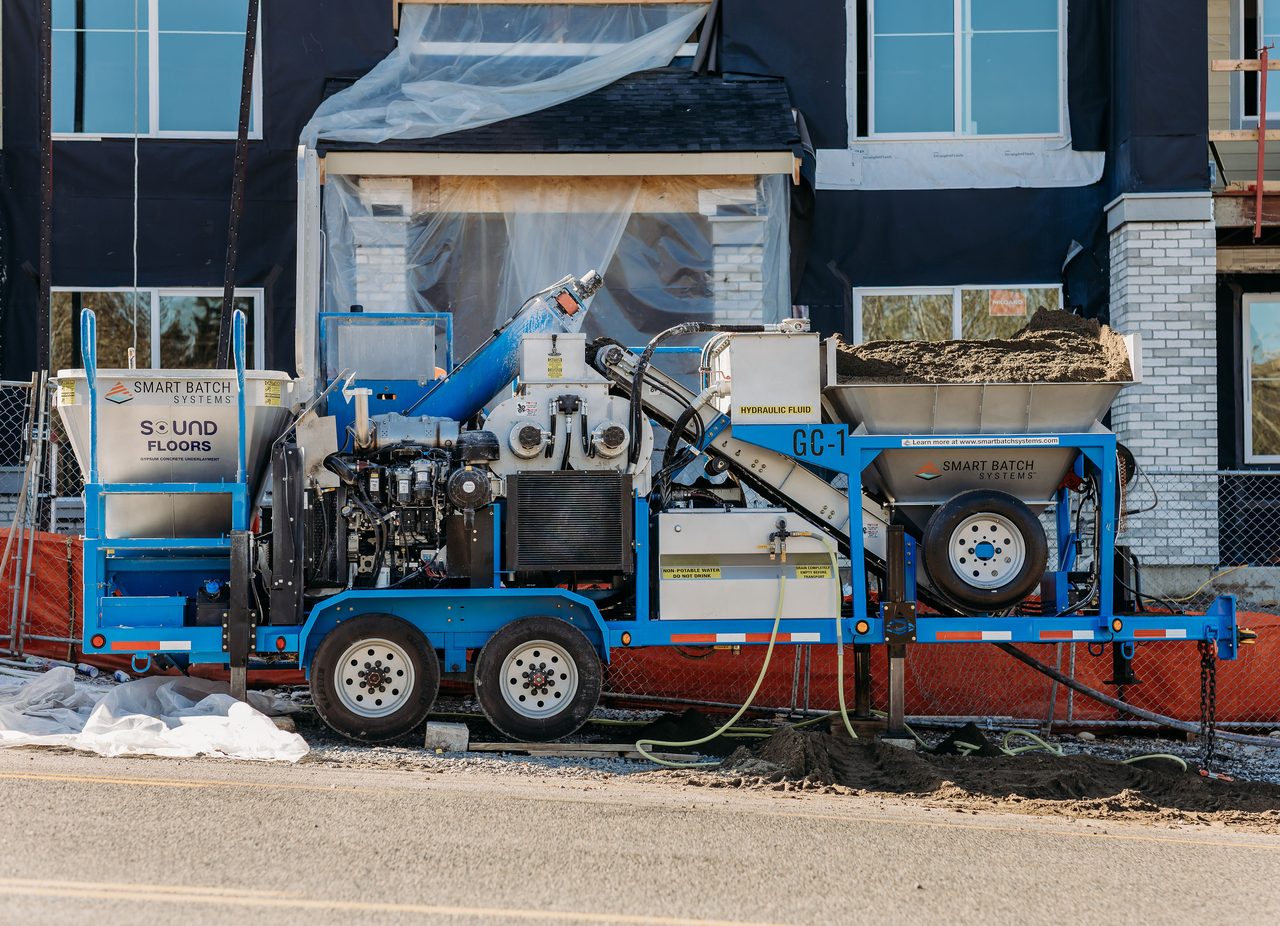
The Smart Batch® GC-1 is a trailer-mounted, computer-controlled aggregate batch plant built by Smart Batch Systems (Norman, Oklahoma), sister company of gypsum manufacturer Formulated Materials — built in the USA. We bring the batch plant to your site.
How it works on your job:
- Arrival and setup. The rig is a 25-foot, 18,000-pound trailer that levels itself on hydraulic jacks and is batching in under 10 minutes. No staging yard, no plant convoy, no waiting on ready-mix windows.
- Loading. Gypsum cement loads from 3,000-pound supersacks; sand loads in bulk. Both feed an enclosed 51-cubic-foot hopper — roughly 7 batches of capacity per mix design.
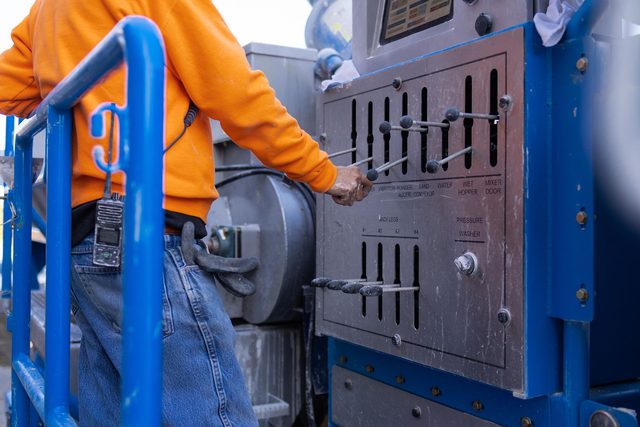
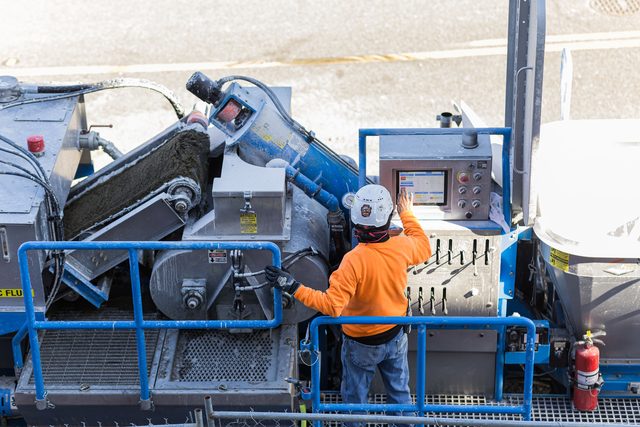
- The mix design goes into the computer. Your spec — PSI target, mix proportions, water limits — is programmed as the job’s recipe. The machine will not drift from it, because it cannot. There is no “looks right.” There is only the scale.
- Weighed batching. Every ingredient of every batch — gypsum, sand, water — is weighed. A half-ton batch is produced every 75 seconds, sustaining 13–20 cubic yards per hour. That throughput supports pours up to 40,000 square feet in a day.
- The record. The machine logs weights, measures, and mix duration for every batch and archives every batch to a cloud server. QC reports are generated and emailed automatically. The system also tracks location and crew, and the pump can be started and stopped remotely.
A 110HP Tier 4 diesel runs the whole plant for 7–13 hours — a full pour day without refueling.
Weights. Timestamps. Proof.
Every batch report records, for every single batch poured on your job:
- Ingredient weights — actual pounds of gypsum, sand, and water dispensed, batch by batch, against the programmed mix design
- Mix duration — how long each batch was mixed
- Timestamps and sequence — when each batch was produced, in order, across the pour day
- Job and location data — which site, which crew
Why this matters to you: UL fire-rated assemblies and tested acoustic assemblies are specified around a minimum compressive strength at a specified thickness. When a floor is questioned months later — a core tests low, an adhesive fails, an owner complains — the usual outcome is a he-said/she-said between the GC, the sub, and the flooring installer, resolved by whoever has the deepest patience for arguing.
A per-batch log ends that argument before it starts. Either the batches matched the mix design or they didn’t, and the record says which. For the batches we pour, the record says they did.
Ask any other gypcrete crew in Washington for a per-batch mix report. We’ll wait.
Delivered. Filed. Defensible.
A mock walkthrough of the documentation package on a typical multifamily pour:
- Submittal set (pre-pour): product data for the specified gypsum underlayment, the UL assembly references your architect called out, and the programmed mix design for the job.
- Per-pour batch reports: the cloud-archived QC report for each pour day — every batch’s weights, measures, and mix duration, emailed automatically and compiled per building or per pour area.
- Pour log: dates, areas, thicknesses, and square footage placed, mapped to your unit/building numbering.
- Field QC: slump-ring checks and cast compressive-strength samples per ASTM C472 practice, tied to the batch record for the same pour.
Hand that package to your owner’s rep at closeout. It is the difference between “our sub says it was fine” and “here is the record.”
Enclosed. Contained. Breathable.
Traditional batching means a laborer breaking paper bags of gypsum cement all day — the dustiest, most punishing position on the crew, and a respirable crystalline silica exposure OSHA expects you to control under 29 CFR 1926.1153.
The GC-1 batches from enclosed bulk supersacks inside a contained hopper. Smart Batch Systems measures the result at roughly a 94% reduction in airborne dust versus bag-batching — and the bag-breaking position simply no longer exists. A smaller crew, a cleaner pour floor, less dust drifting onto adjacent trades, and one less exposure line item in your site safety plan.
Fast Setup. Big Days. Predictable Dry-Down.
- Under 10 minutes from parked to pouring. No plant assembly, no ready-mix scheduling conflicts.
- Up to 40,000 sq ft per day. One weighed batch every 75 seconds means the pump never waits on the mix. Fewer pour days, fewer trade conflicts, faster turnover to flooring.
- Known water content = predictable dry time. Because water is weighed — not guessed — the slab’s dry-down toward flooring-ready moisture levels is consistent and plannable. Over-watered hand batches are the reason gypcrete gets a reputation for “never drying.” Ours dries on the curve the manufacturer published, because it went down at the water content the manufacturer specified.
The Machine, Up Close